Heat Pump Water Heater vs Electric Storage Water Heater
Choosing the right hot water system can have a significant impact on your household's energy consumption, running costs and long-term comfort. Two of the most common options available today are heat pump water heaters and traditional electric storage water heaters.
While both systems provide reliable hot water for everyday use, they operate very differently and offer distinct advantages depending on your household's needs. In this guide, we'll compare heat pump water heaters and electric storage water heaters to help you determine which solution may be the better choice for your home.

What Is a Heat Pump Water Heater?
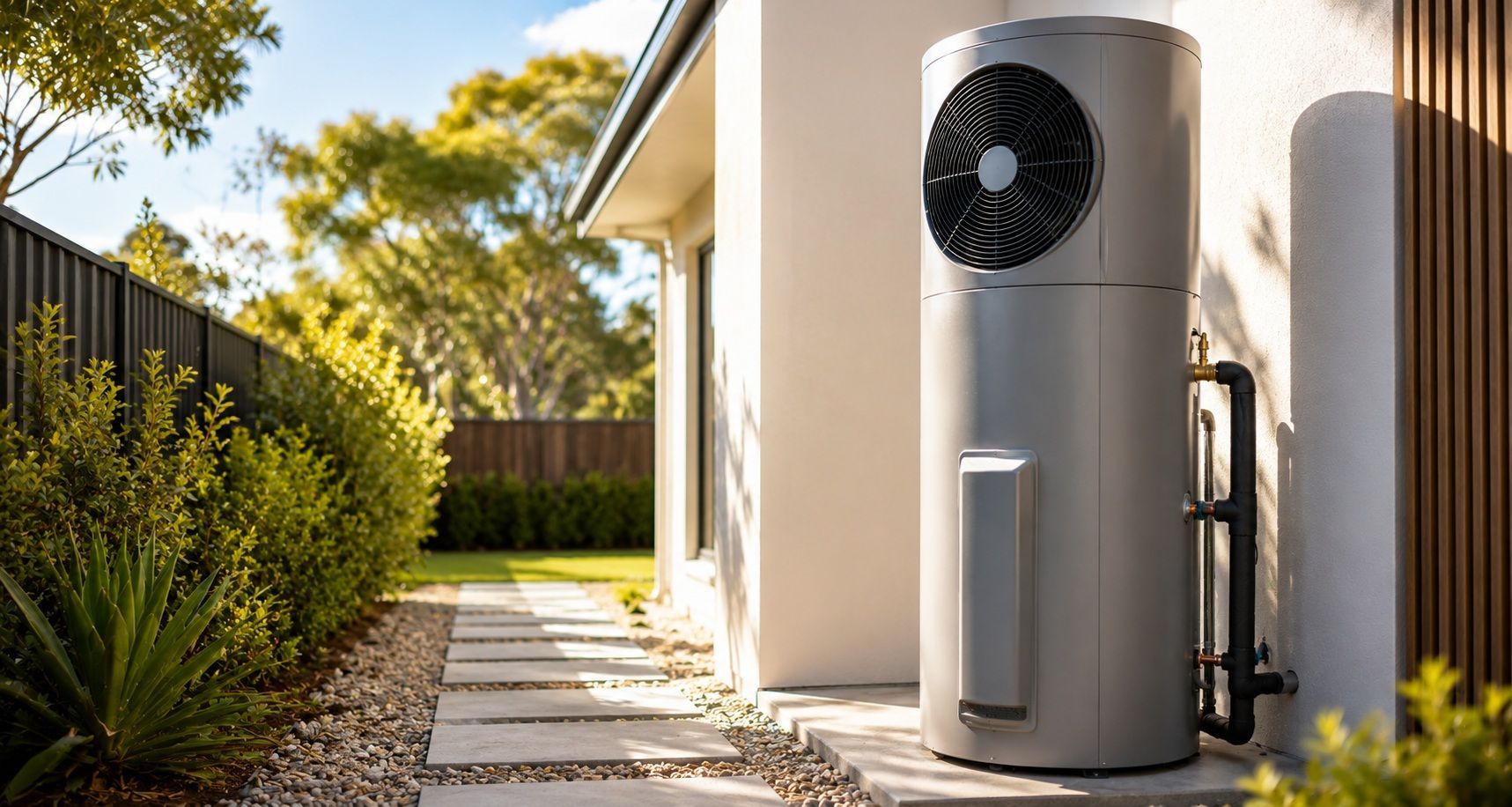
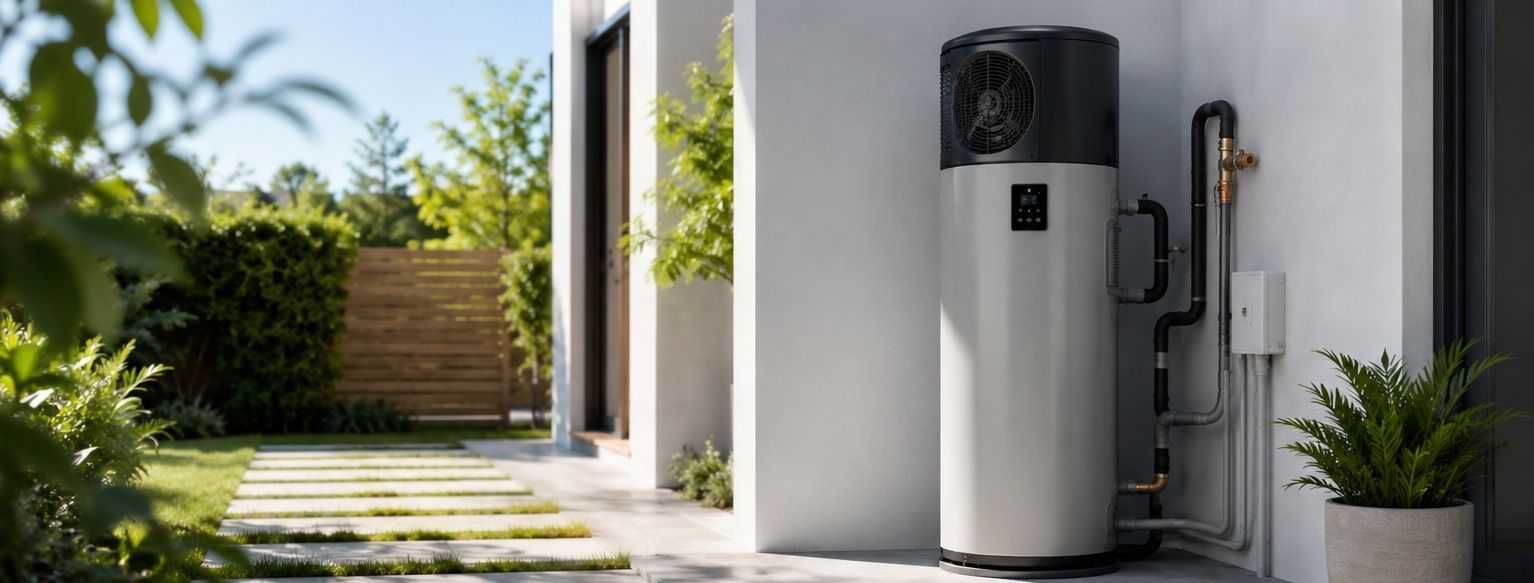
A heat pump water heater uses renewable heat from the surrounding air to heat water stored within a tank.
Rather than generating heat directly, the system captures existing heat energy from the environment and transfers it into the water. This process allows the system to produce hot water while using significantly less electricity than many traditional electric systems.
Modern heat pump water heaters are designed to provide reliable performance while helping homeowners reduce energy consumption and ongoing running costs.
What Is an Electric Storage Water Heater?
An electric storage water heater stores water in an insulated tank and uses an electric heating element to raise the water temperature.
When hot water is used throughout the home, the tank automatically reheats replacement water to maintain a ready supply.
Electric storage systems have been a popular choice for decades due to their simplicity, relatively low upfront costs and widespread availability.
However, because they rely entirely on electricity to generate heat, they generally consume more energy than heat pump alternatives.
How They Heat Water
The biggest difference between the two systems is how they produce heat.
Heat Pump Water Heater
A heat pump water heater:
- Draws heat from the surrounding air
- Transfers that heat into stored water
- Uses electricity primarily to power the compressor and fan
- Operates using heat transfer technology
Electric Storage Water Heater
An electric storage water heater:
- Uses an electric element to create heat
- Relies entirely on electricity for water heating
- Reheats water directly within the tank
- Uses a simpler heating process
Because heat pumps transfer heat rather than generate it, they can achieve significantly greater efficiency.
Energy Efficiency Comparison
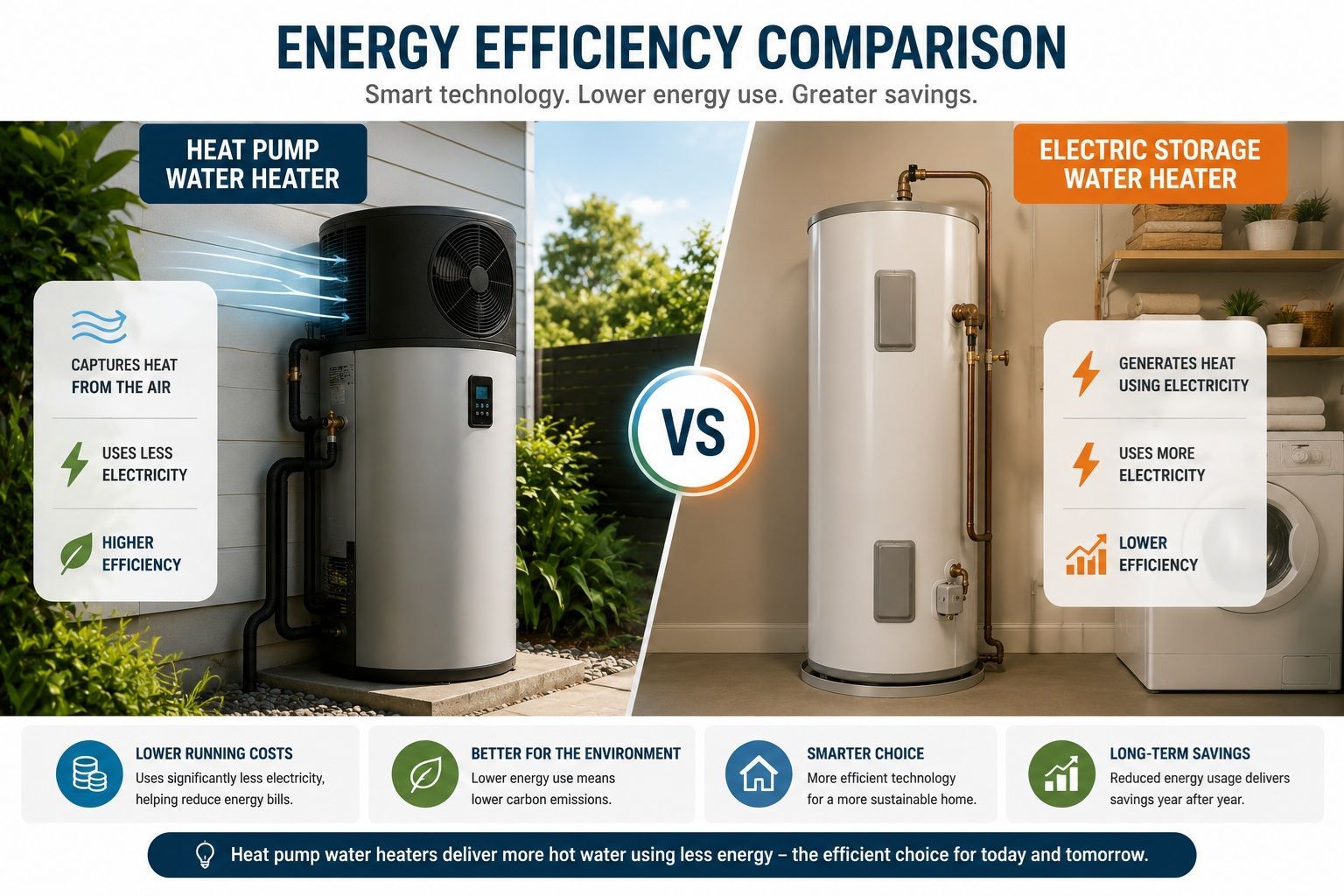
For many homeowners, energy efficiency is one of the most important considerations when choosing a hot water system.
Heat pump water heaters are widely recognised as one of the most energy-efficient water heating technologies available today.
The system's ability to capture free heat from the air means it can often produce multiple units of heat energy for every unit of electricity consumed.
Traditional electric storage water heaters do not benefit from this process. Every unit of heat generated requires electricity to be consumed directly.
As a result, households switching from electric storage systems to heat pump technology often experience noticeable reductions in energy usage.
Running Cost Comparison
Hot water heating is typically one of the largest energy expenses in an Australian home. Because heat pump water heaters use less electricity, they generally cost less to operate over time. While actual savings depend on factors such as household size, water usage patterns and electricity rates, many homeowners choose heat pump systems specifically to reduce long-term running costs.
Electric storage systems may have lower purchase prices initially, but they often cost more to operate throughout their lifespan.
When evaluating total ownership costs, it's important to consider both the installation cost and ongoing energy consumption.
Environmental Impact
Many households are also considering the environmental impact of their hot water system.
Heat pump water heaters typically produce lower greenhouse gas emissions because they use less electricity to achieve the same result.
Benefits may include:
- Reduced energy consumption
- Lower carbon emissions
- Improved household sustainability
- Better compatibility with renewable energy sources
Electric storage systems can still provide reliable performance, but they generally require more electricity and therefore have a larger environmental footprint.
Performance and Hot Water Supply
Both heat pump water heaters and electric storage water heaters are capable of supplying reliable hot water for everyday household use.
The best option depends on:
- Household size
- Number of occupants
- Daily hot water usage
- Available installation space
Modern heat pump systems are available in a variety of tank capacities and can comfortably support the hot water demands of many Australian households. When correctly sized, both systems can provide consistent hot water throughout the day.
Solar Compatibility
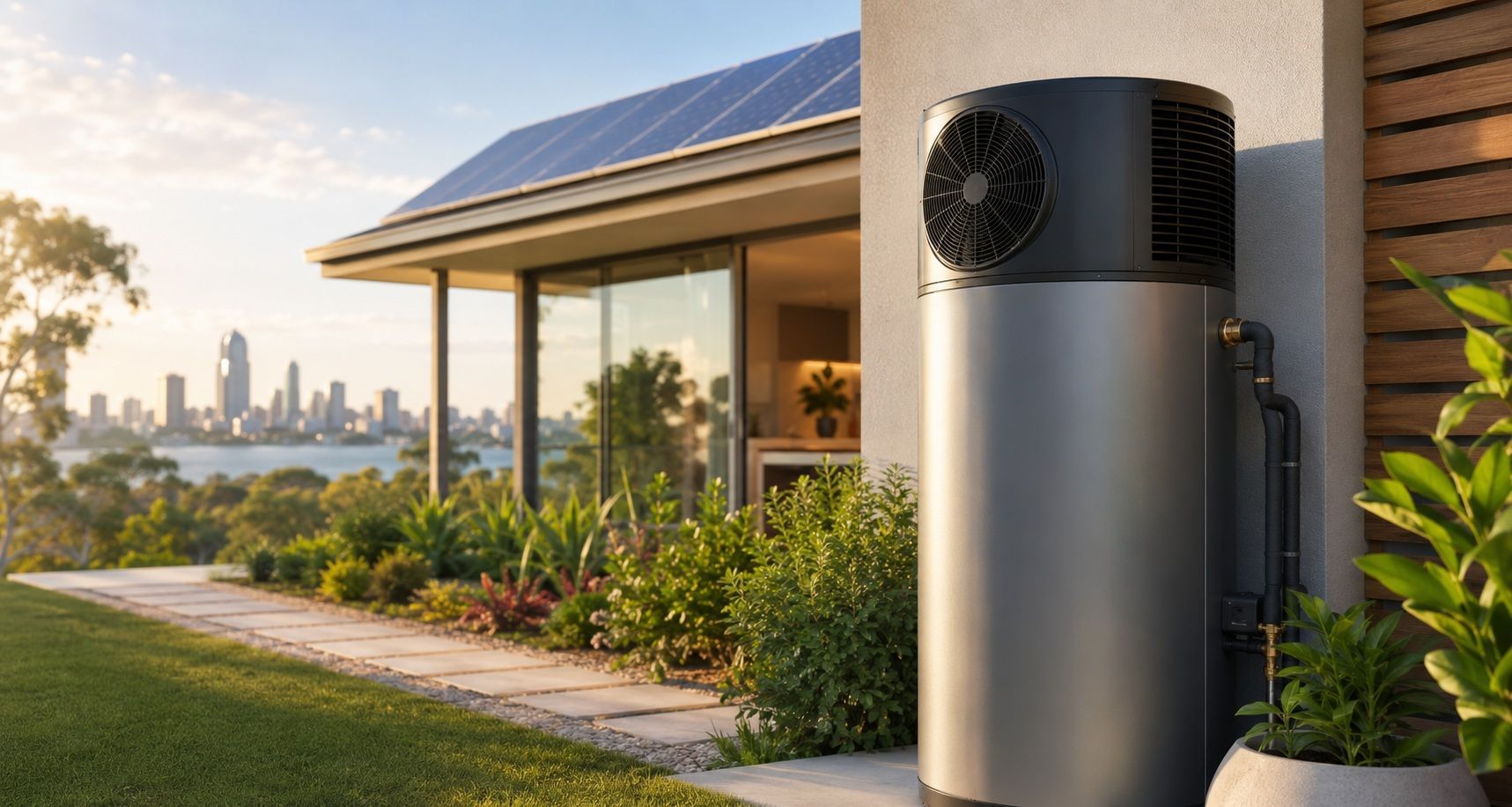
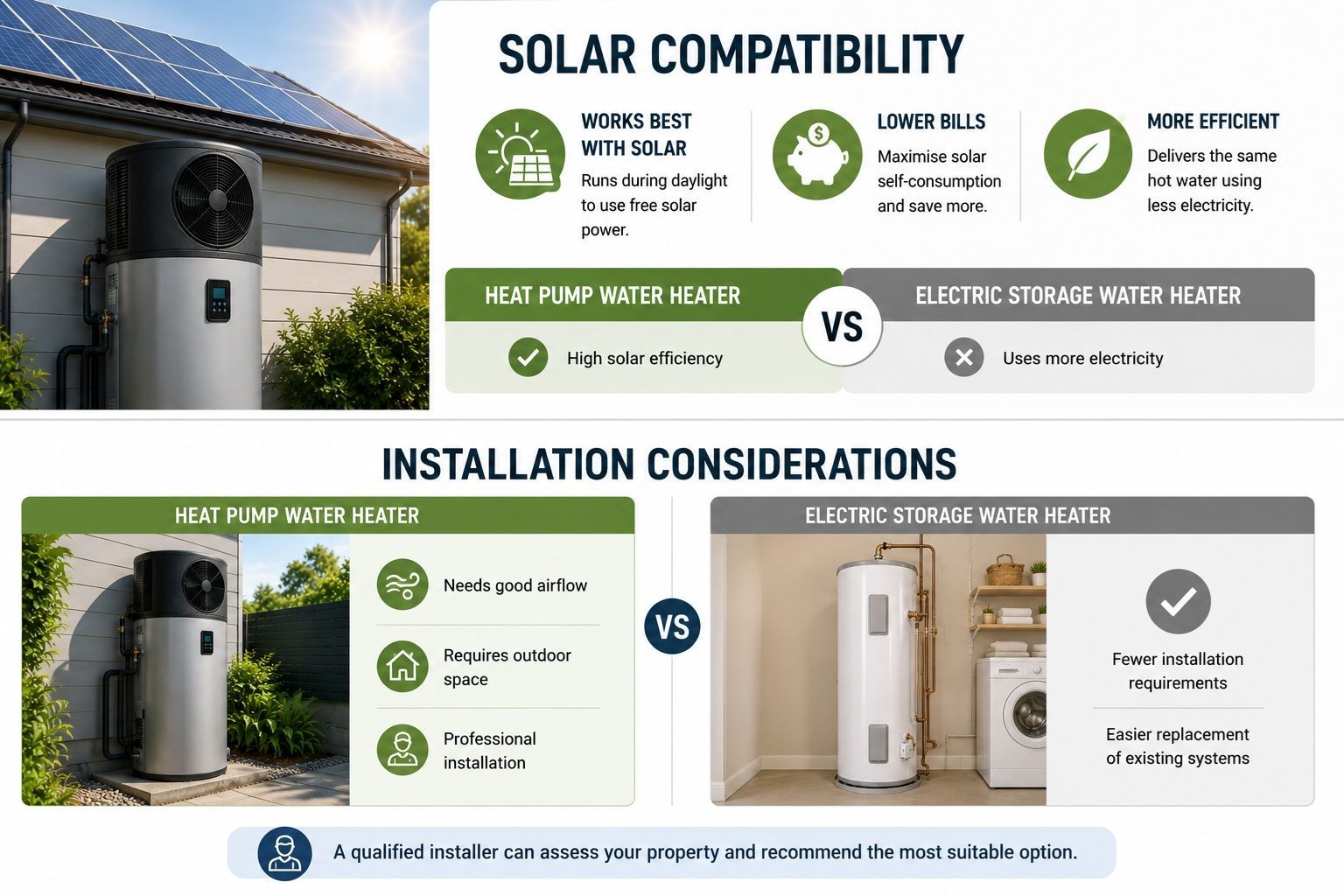
One area where heat pump systems excel is solar compatibility. Heat pump water heaters can be programmed to operate during daylight hours when solar panels are generating electricity.
This allows homeowners to maximise solar self-consumption and further reduce energy costs.
While electric storage systems can also utilise solar energy, they generally require more electricity to heat the same volume of water.
For households investing in solar power, heat pump technology often provides greater overall efficiency.
Installation Considerations
When choosing between the two systems, installation requirements should also be considered.
Heat pump water heaters require:
- Adequate airflow around the unit
- Suitable outdoor installation space
- Professional installation
Electric storage systems generally have fewer installation requirements and can often replace existing electric systems more directly. A qualified installer can assess your property and recommend the most suitable option.
Which Hot Water System Is Better?
There is no single answer that suits every household.
A heat pump water heater may be the better option if you:
- Want lower running costs
- Prioritise energy efficiency
- Have suitable installation space
- Plan to pair the system with solar panels
- Want to reduce household energy consumption
An electric storage water heater may be suitable if you:
- Have a limited upfront budget
- Are replacing an existing electric system
- Need a straightforward installation solution
For many homeowners, the long-term energy savings offered by a heat pump water heater make it an attractive investment.
Looking for Expert Advice on Heat Pump Hot Water Systems?
At Simply Hot Water Perth, we supply and install quality heat pump hot water systems for homes across Perth and WA. Our team can help you compare available options and choose the right system for your household's hot water requirements.
Visit our Heat Pump Hot Water Systems Perth page to learn more about available systems and installation services.